

Conclusion: At a crucible glass plant in Kaspiysk, Republic of Dagestan, Russia, KULUN delivered a distributed control architecture rather than a single controller. Multiple ST200 single-phase power controllers (150 A, 380 V) are built into power cabinets, and each output feeds a step-down transformer before reaching the bushing or the molybdenum plates of the melting zone. A Siemens PLC acts as the DCS for plant-wide temperature control. The system has been fully commissioned and is running in production.
Industry: Glass & glass fiber | Reference site: Kaspiysk, Republic of Dagestan, Russia | System includes: DCS + crucible control cabinets with ST200 single-phase power controllers, 150 A
KULUN Electric supplied the power control layer of this project: multiple ST200 single-phase 150 A power controllers arranged in cabinets, transformer-fed output circuits, and the electrical interface that lets a Siemens PLC-based DCS hold every heating zone at its set temperature. The scope covered cabinet design, power control, protection and field wiring, so the customer deals with one supplier for the entire heating control chain rather than with separate controller, cabinet and integration vendors.
1. Project Overview
Industry | Glass & glass fiber, crucible glass melting |
Reference site | Kaspiysk, Republic of Dagestan, Russia |
System architecture | Distributed control system (DCS) + crucible control cabinets |
System includes | Multiple ST200 single-phase power controllers in power cabinets |
Rating | 150 A, 380 V |
Load path | Cabinet output → transformer → bushing and molybdenum plates (melting zone) |
Control | Siemens PLC as DCS, closed-loop temperature control |
Status | Installed and commissioned on site |
2. Application Background
In crucible glass production, two heating circuits decide product quality: the molybdenum plates that heat the melting zone, and the bushing through which the glass is drawn. Bushing temperature drift changes glass flow and filament formation directly, while melting-zone temperature governs melt homogeneity. Both require smooth, continuously variable power with fast response.
The Kaspiysk plant runs many heating zones spread across the line. Point-to-point instrument control cannot keep the whole line consistent, so the project adopted a DCS architecture: the Siemens PLC collects zone temperatures and issues power setpoints, while each crucible has its own control cabinet whose ST200 units regulate output according to those setpoints.
3. Requirements & Technical Challenges
- Low-voltage, high-current loads. Bushing and molybdenum plates are low-resistance loads. Cabinet output must be matched through step-down transformers, and the controller has to stay stable when feeding a transformer primary.
- Many heating zones. Several crucibles and multiple zones per crucible mean multiple ST200 units arranged in cabinets for centralised distribution and maintenance.
- Tight temperature stability. Both melting zone and bushing are sensitive to fluctuation, so output must be stepless and smooth.
- DCS integration. Cabinets must accept analogue or communication setpoints from the Siemens PLC and report status back for plant-wide monitoring.
- Continuous duty in a hot environment. Glass melting runs around the clock; cabinet thermal design and device derating must survive long periods at full load.
- Export project execution. Electrical design, cabinet layout, labelling and maintainability had to suit delivery to Dagestan and local operation.
4. KULUN Solution
KULUN configured crucible control cabinets plus power cabinets built around multiple ST200 single-phase power controllers (150 A, 380 V), one controller per heating zone, with each output feeding a transformer and then the bushing or molybdenum-plate load.
On the control side, a Siemens PLC forms the DCS: thermocouple signals from every zone are collected centrally, the PLC calculates and issues setpoints, and each ST200 regulates its output accordingly — central supervision with distributed control. Local push-button stations at each crucible allow start/stop and commissioning work close to the equipment.
Key Features of the Solution
ST200 150 A single-phase control — matched to single-phase, high-current heating circuits of the melting zone and bushing, with continuously variable output for fine temperature control. Multi-unit cabinet integration — controllers, protection, wiring and cooling are consolidated in cabinets, so even a large number of zones stays organised and serviceable. Transformer-fed output — the cabinet regulates on the transformer primary, and the stepped-down secondary drives low-resistance bushing and molybdenum loads smoothly. DCS-ready interface — accepts setpoints from the Siemens PLC and returns operating status, fitting directly into the plant DCS. Local plus remote operation — panel instruments show each zone, while local stations support commissioning and production switching. Built for continuous duty — cooling and protection are specified for the heat and uninterrupted operation typical of glass melting.
5. Reference Projects
The system is in service at a crucible glass plant in Kaspiysk, Republic of Dagestan, Russia, controlling the melting zone and bushing temperatures.
Kaspiysk | Crucible melting zone and bushing control
The configuration follows the process requirement of many zones, low-voltage high-current loads and centralised temperature control: multiple ST200 150 A controllers form the power cabinets, one per heating circuit of the bushing and molybdenum plates; the Siemens PLC closes the loop on temperature. Installation and commissioning are complete, and every zone now runs under closed-loop control.
6. Project Site
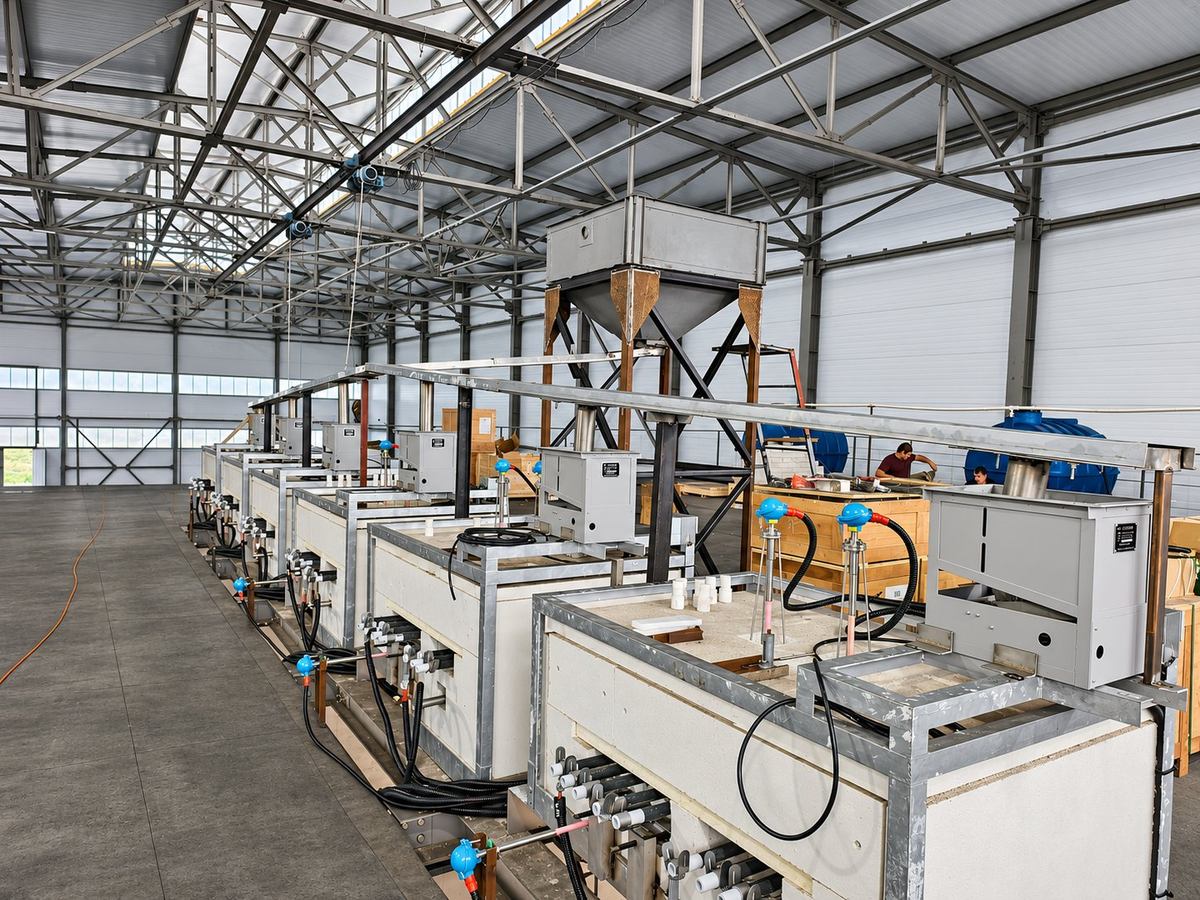
Kaspiysk site: crucible production line, with temperature sensors on each unit
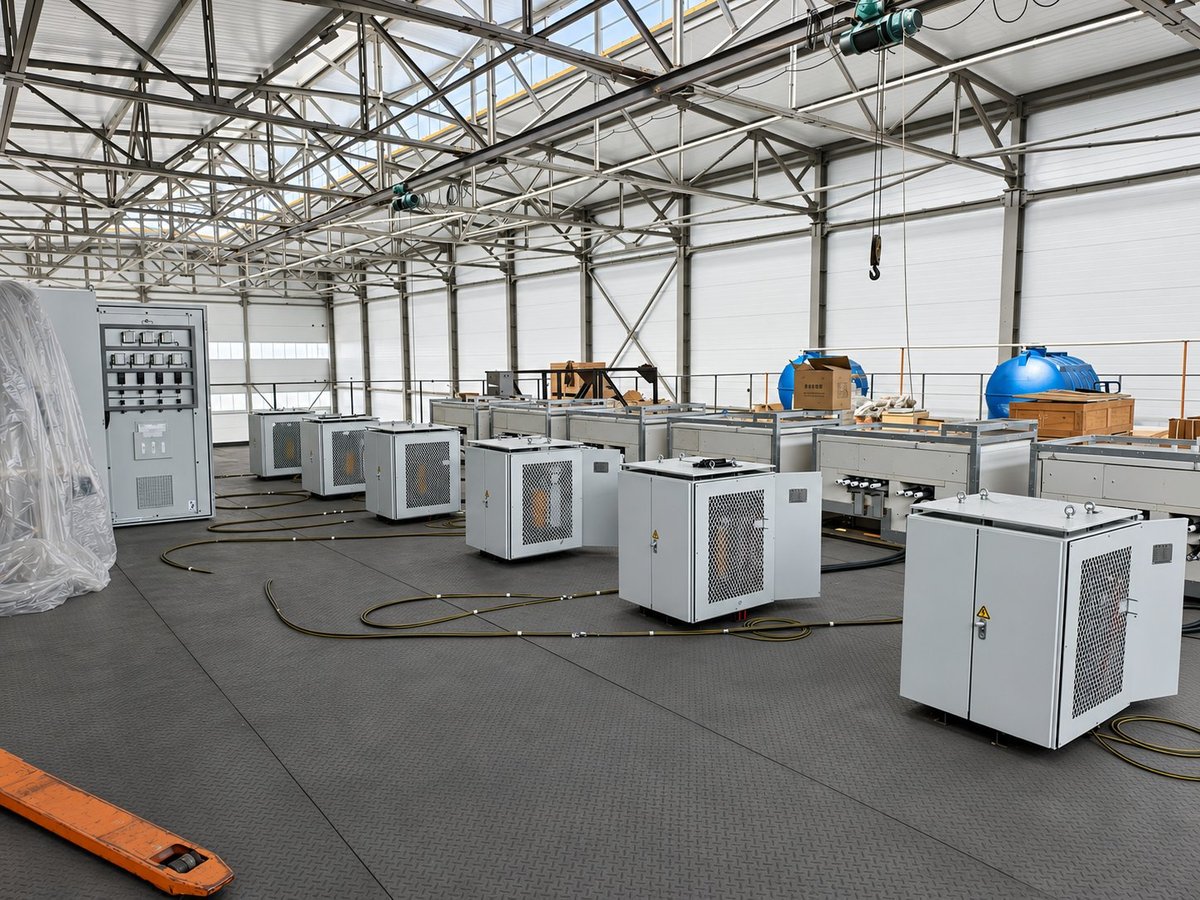
Power cabinets built from multiple ST200 single-phase controllers, arranged on the site platform
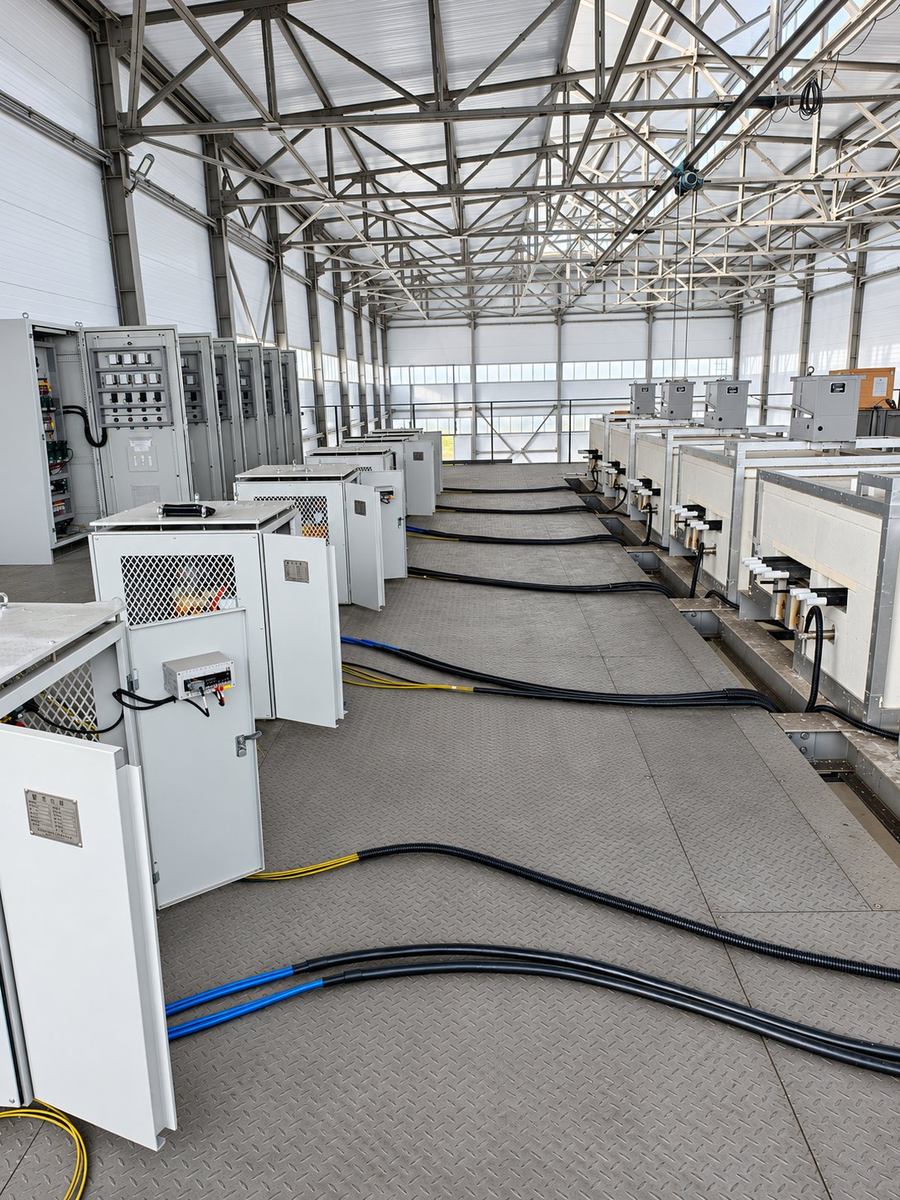
Power cables between the cabinets and the crucible heating loads
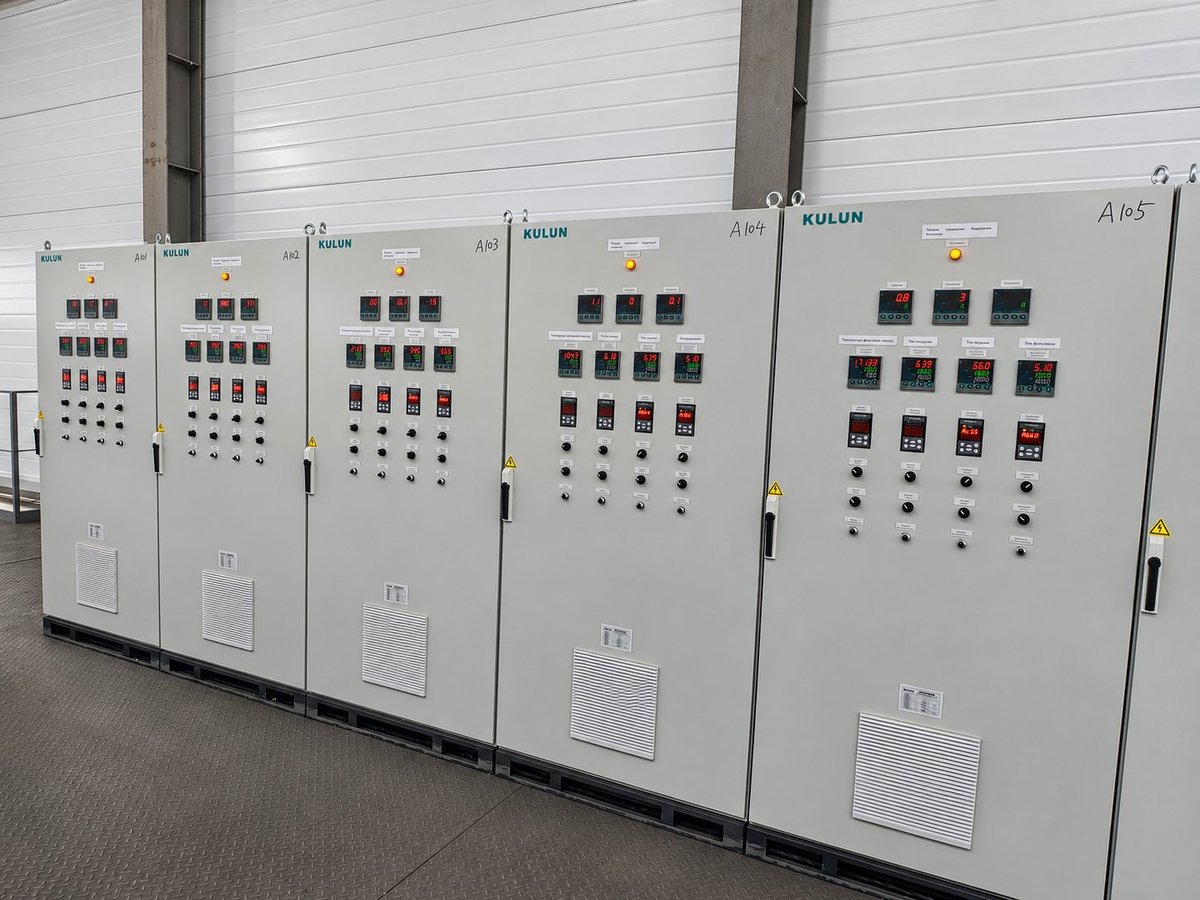
KULUN control cabinet lineup (A101–A105), with zone temperature instruments on the panels
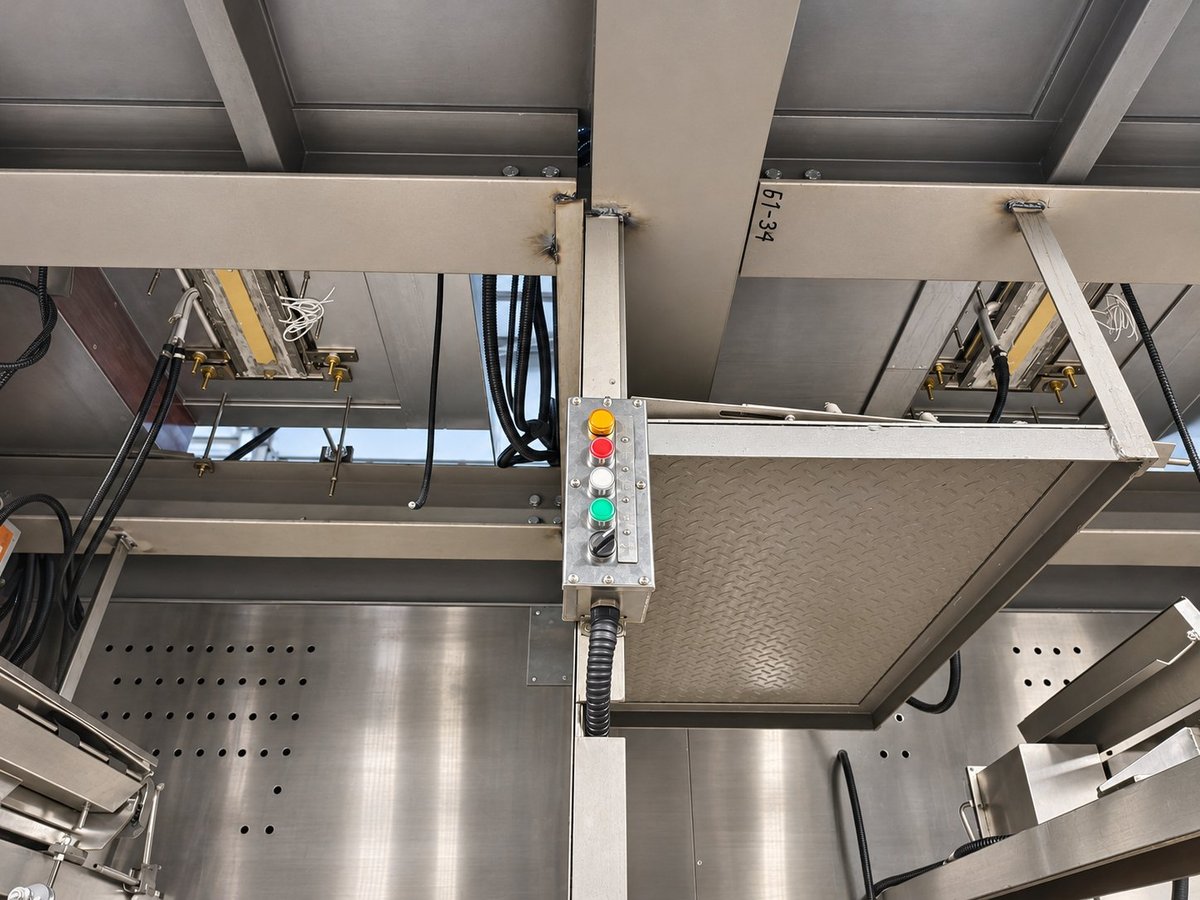
Local push-button station at a crucible unit for start/stop and commissioning
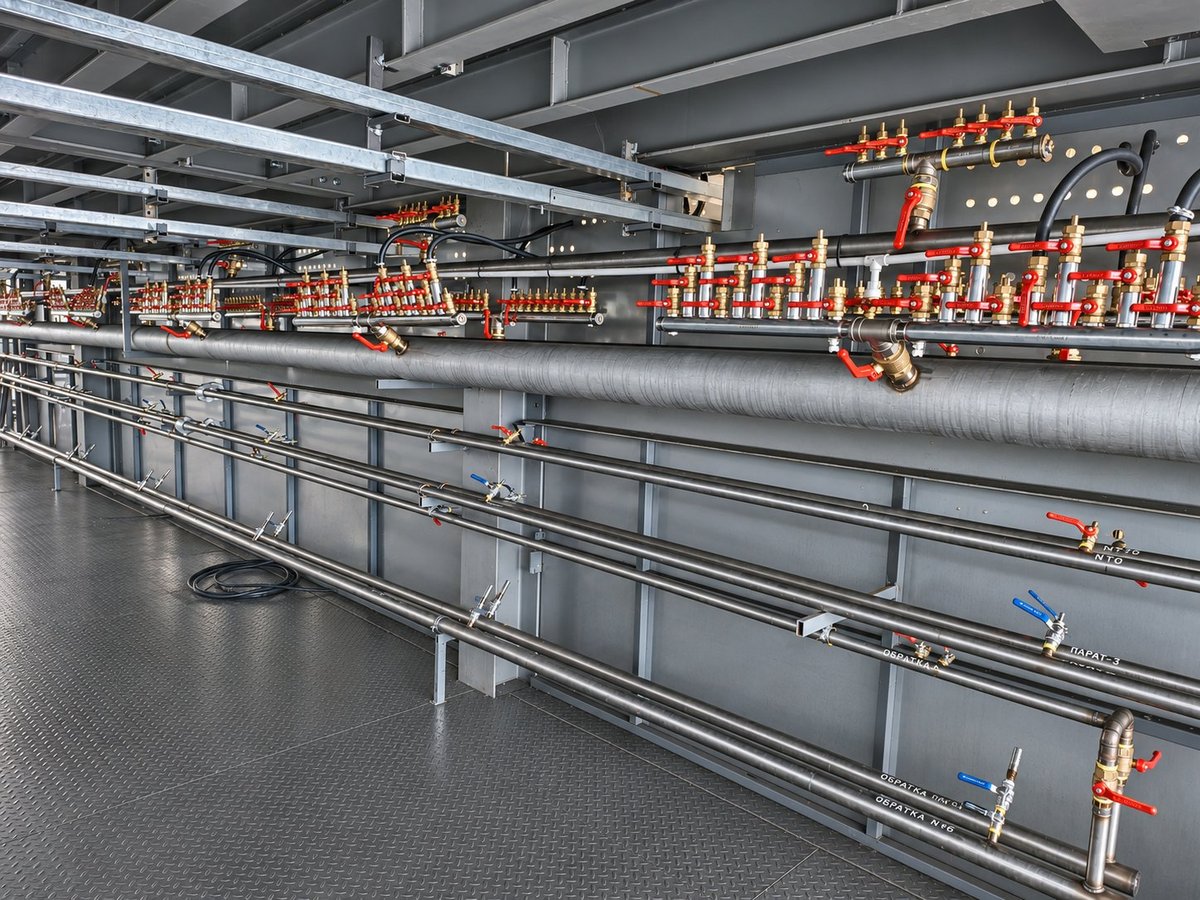
Cooling water distribution manifold supporting continuous operation
7. Results
After commissioning, every melting-zone and bushing circuit runs under closed-loop temperature control, and the plant is in continuous production.
- Multiple heating zones supervised centrally through the Siemens PLC DCS;
- ST200 150 A controllers in cabinets matched to multi-circuit, high-current loads;
- Transformer-fed output delivers smooth, controllable power to low-resistance loads;
- Setpoint delivery and status feedback fully automated between DCS and cabinets;
- Local operation combined with remote control for easier commissioning and maintenance.
Note: actual performance varies with crucible design, load characteristics, temperature-loop tuning, grid conditions, cooling and process requirements.
8. Applicable Scenarios
The cabinet-based ST200 solution with DCS integration can be configured to the number of zones, current rating and control requirements of each project.
- Crucible glass melting lines (melting zone and bushing control)
- Electric heating in glass tank furnace drawing sections
- Bushings, molybdenum electrodes and plates — low-voltage, high-current loads
- Multi-zone DCS or PLC-based temperature control projects
- Export projects requiring power cabinets and crucible control cabinets
9. FAQ
Can the ST200 single-phase 150 A controller be used for crucible bushing temperature control?
Yes. It suits single-phase, high-current loads such as bushings and molybdenum plates in the melting zone. Built into cabinets, it provides stable power control for multiple zones, as in this Kaspiysk project.
Why is a transformer used after the power cabinet?
Bushings and molybdenum plates are low-resistance loads that need low voltage and high current. Regulating on the transformer primary and stepping down on the secondary matches the load electrical characteristics and keeps controller selection within standard voltage classes.
How are multiple controllers connected to the DCS?
Each cabinet accepts analogue or communication setpoints from the PLC and reports operating status back. The PLC collects zone temperatures centrally and closes the loop — central supervision with distributed control. In this project the DCS is built on a Siemens PLC.
What parameters are needed to specify a crucible temperature control project?
Typically the number of heating zones, power and voltage/current per zone, load type (bushing, molybdenum plate), whether a transformer is used, control signal type, PLC brand, cooling conditions and installation space.
Can KULUN support overseas crucible heating projects?
Yes. KULUN Electric configures ST200 power controllers, power cabinets and crucible control cabinets according to load capacity, control mode and site conditions, and supports delivery and commissioning for overseas projects.