

SCR Controller Keeps Blowing Fast Fuses? APR3 High-opening Troubleshooting and Fix
Problem – Cause – Fix – Result – Boundaries
- Problem: at an industrial heating site, APR3 controllers repeatedly blew fast fuses once opening exceeded 70%, with some units showing more pronounced temperature rise.
- Investigation directions: load and insulation, rated-current-to-fuse matching, startup method, duty cycle, load nature, phase angle, communication and firing state, cooling conditions.
- Fix in this case: under the site conditions and test setup, the phase-angle parameter was adjusted from 95 to 90, and related units received circuit-board and firmware updates.
- Verification: after adjustment, the equipment ran continuously at 100% output for 48 hours with no further fuse blowing or other anomalies.
- Boundaries: 95→90 is only the result of this case — not a universal parameter for all APR3 units or all loads. Do not copy it without on-site measurement.
When a controller repeatedly blows fast fuses at high opening, you cannot simply replace the fuse and keep running. The correct approach is to shut down and confirm safety first, then check in order: load short circuit or grounding, rated current and fuse specification, startup method, duty cycle, phase angle, SCR and firing circuits, communication state, and cooling conditions — and finally verify the fix through staged loading and continuous operation.
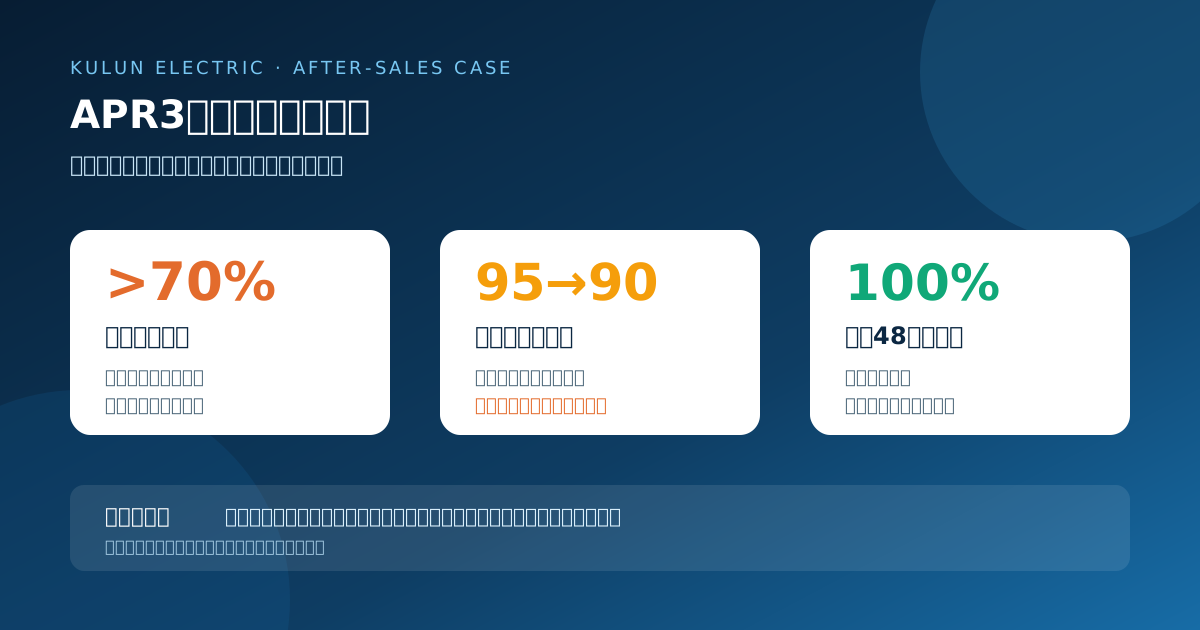
Summary of the APR3 high-opening fuse-blowing case result.
Case Symptoms: The Higher the Opening, the More Concentrated the Failures
An industrial heating site used APR3 three-phase power regulators to drive transformer-type loads. At lower openings no obvious problem appeared, but once opening exceeded 70%, fuse blowing started to recur, and some units showed more prominent temperature rise.
It is tempting to focus entirely on the fuse itself: swap in an identical fuse, or try a larger rating. However, the fast fuse is a key protection element of the main circuit. Its repeated operation usually means there is an abnormality to confirm in current, firing, load, or cooling. Re-energizing repeatedly without finding the cause can extend damage to SCRs, busbars, transformers, or the load side.
Why You Can’t Just Replace the Fuse
High opening means the controller delivers higher effective voltage and power to the load, and main-circuit current and device thermal stress rise accordingly. Problems hidden at low opening can concentrate at high opening — for example low load impedance, local insulation degradation, improper fuse selection or installation, blocked cooling ducts, abnormal firing waveforms, or parameters mismatched to the load condition.
Therefore, "it blows as soon as the opening goes up" only helps identify the triggering condition — it is not itself a diagnosis. After a fuse blows, first find out on which phase it happened, what the opening and current were at the time, and whether temperature rise or communication anomalies accompanied it; only then decide whether replacement and re-testing are allowed.
The Investigation Process
The site did not treat the "phase-angle parameter" as the only answer, but checked the system chain item by item.
First, the startup method and duty cycle were reviewed: does the equipment jump to target opening in one step or load in stages, and does the fault always appear at similar load, similar opening, and similar running time? Second, the load nature and connections were inspected to rule out obvious short circuits, grounding, phase loss, and poor contact, and the three-phase currents were compared for balance.
Then the controller’s rated current, the load’s actual current, and the fuse specification were checked, along with the SCR main circuit, firing connections, cooling fans, and air ducts. For transformer-type loads, closing inrush, magnetic bias, and firing symmetry also need attention — the panel opening alone is not enough. Finally, judgment was combined with the phase-angle parameter, communication state, and firing state.
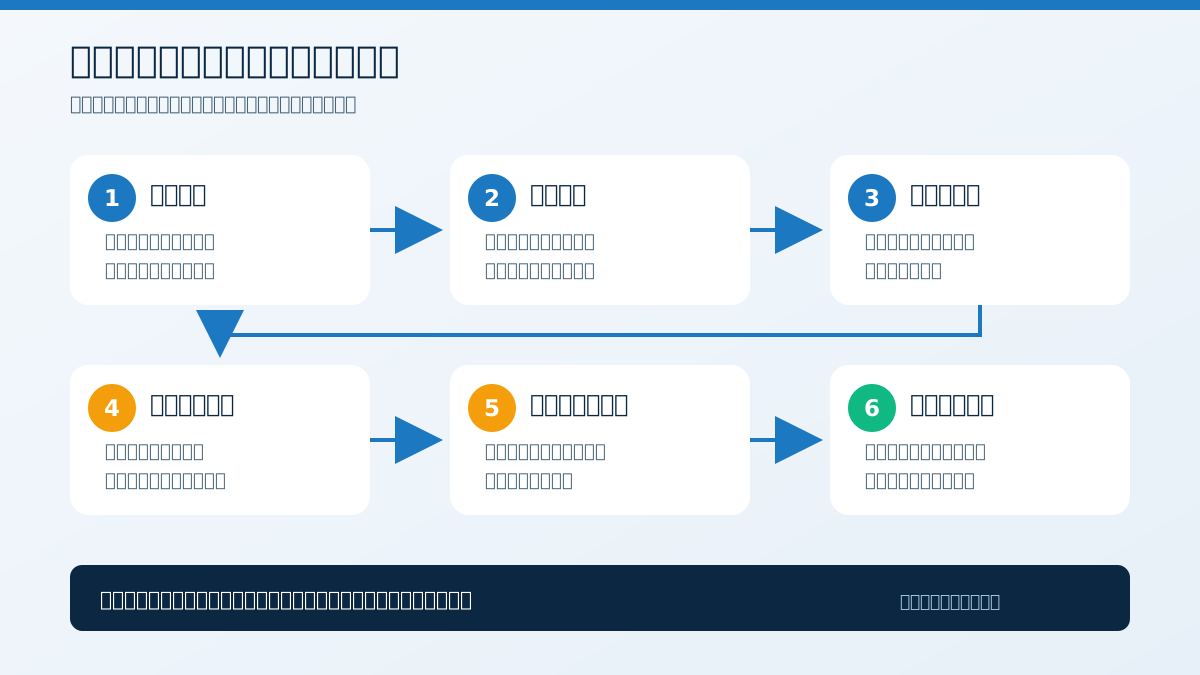
APR3 high-opening repeated fuse-blowing investigation flow.
Reference Waveforms
The following are normal reference waveforms of a three-phase controller — not captured at this case site, and not a substitute for on-site measurement.
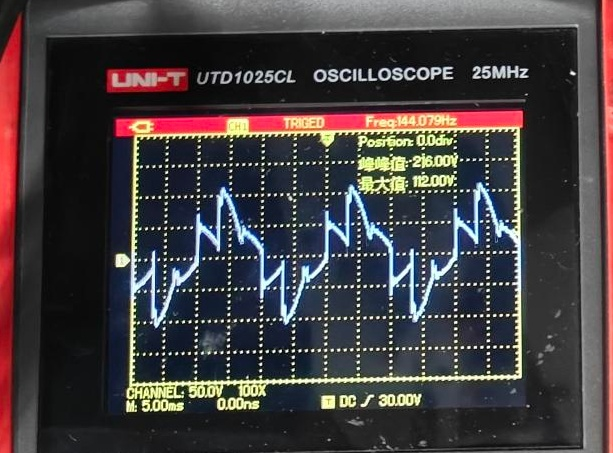
70% normal reference waveform.
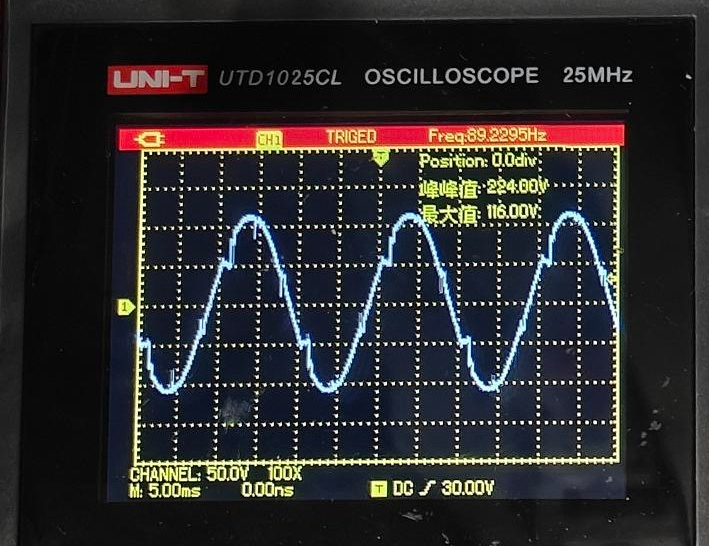
100% normal reference waveform.
The Fix: Parameter Adjustment and Batch Rectification Together
After completing the checks above with other test conditions unchanged, the site adjusted the phase-angle parameter from 95 to 90. After the adjustment, the equipment ran continuously at 100% output for 48 hours with no further fuse blowing or anomalies.
For the associated units, the site also carried out batch circuit-board replacement and firmware updates. This matters: the case did not end with "changing one number" — parameters, hardware, and firmware were rectified together and verified by sustained full-output operation. For some associated units, constant-current mode was evaluated according to actual conditions to reduce overcurrent risk.
It must be stressed again: 95→90 was obtained on a specific unit, specific load, and specific test conditions. Different load nature, transformer parameters, control methods, and firmware versions may need different settings. Do not copy this parameter without confirming current, waveform, and load state.
A Reusable Checklist for Controller Fuse Blowing
When facing an APR3 blowing fast fuses, a power regulator blowing fuses, or thyristor-controller overcurrent, record and investigate in this order:
- Record fault conditions: model, rated current, opening, three-phase currents, running time, fault codes, and which phase’s fuse blew.
- Check load and insulation: confirm no short circuit, grounding, phase loss, or abnormal impedance; measurements must comply with equipment and site safety rules.
- Verify selection and protection: compare controller rated current, actual load current, fuse model, and maker requirements — never upsize the fuse on your own.
- Inspect main-circuit devices: confirm SCRs are not broken down or abnormally leaking; terminals, busbars, and fuse holders show no looseness, discoloration, or overheating.
- Check firing and control: verify startup method, duty cycle, phase angle, communication state, and firing waveform — watch three-phase firing symmetry.
- Check cooling: confirm fans work, ducts and heatsinks are not blocked, and cabinet temperature and installation spacing meet requirements.
- Verify by staged loading: load up step by step from low opening, recording current, temperature rise, and waveform at each stage; then run continuously at the target condition for a sufficient duration.
Work involving live measurement, main-circuit disassembly, or SCR judgment must be performed by qualified technicians under proper safety conditions.
FAQ
1. Why is it normal at low opening but blows fuses at high opening?
At high opening, main-circuit current and thermal stress are higher, so low load impedance, firing asymmetry, insufficient cooling, or parameter mismatch surface more easily. Judge together with three-phase currents, waveforms, temperature rise, and fault timing — not from opening alone.
2. Can I just upsize the fuse?
No. Upsizing on your own may weaken protection for SCRs and the main circuit, escalating a fuse blow into device or load damage. Verify selection against controller rated current, load conditions, and maker requirements.
3. Does a blown fuse always mean the SCR is damaged?
Not necessarily. SCR breakdown is one cause to check, but load short circuit or grounding, firing anomalies, parameter mismatch, wiring problems, and cooling issues can also operate the fuse. Complete a systematic check after power-off and safe isolation.
4. Can the phase angle be set to 90 directly?
Do not copy it. In this case, with other test conditions unchanged, 95→90 passed a 48-hour continuous 100%-output verification — but that value answers only for this case. Parameter changes must consider model, load, firmware version, current, and waveform.
5. How do I confirm the problem is truly solved?
"It starts after replacing the fuse" is not acceptance. Complete staged loading, record three-phase currents, temperature rise, firing waveforms, and alarm states at the target opening or rated condition, and run for a sufficient duration. This case used 100% output for 48 continuous hours with no recurrence.
When You Need Technical Support, Prepare This Information
If your controller keeps blowing fast fuses, see the APR3 product page and submit via Contact Us: product model, rated current, load nature and power, fault codes, fuse specification, opening and three-phase currents at failure, plus firing waveforms or clear photos. The more complete the information, the faster the investigation narrows down.