

Power-control selection for industrial electric heating
How to Choose an SCR Power Controller?
First check whether the load is single-phase or three-phase, resistive or inductive; then confirm voltage, current, power, firing method, control signal, cooling, and protection requirements. For scenarios with large resistance change — SiC, MoSi2, transformer primaries — focus on the boundaries of constant voltage, constant current, constant power, and phase/zero-cross control.
Conclusion: a controller is not selected by "power kW" alone. The correct order is: load type → phase count and wiring → voltage and current → control method → protection/communication → installation environment → process validation.
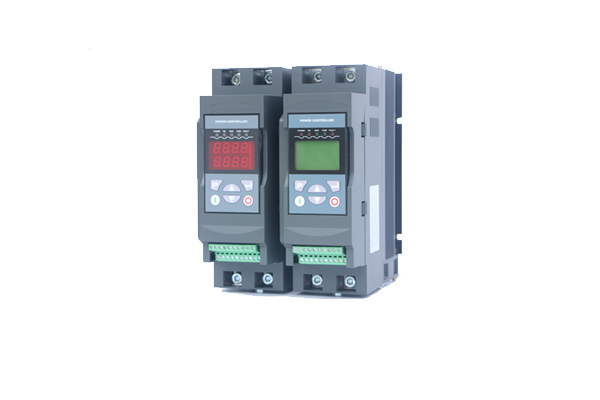
1. Which Applications Suit an SCR Power Controller?
SCR power controllers mainly control power on the AC supply side, with industrial electric-heating loads as the typical target. Applications cover glass, industrial furnaces, chemicals, petroleum, automotive, machinery, air separation, and other AC power-control industries; common equipment includes float glass, glass melting, furnaces, drying ovens, pipeline heating, vessel heat tracing, automotive paint spraying, and forming equipment.
| Customer question | First judgment | Recommended focus |
|---|---|---|
| How to choose a controller for an industrial furnace? | Confirm single/three-phase, zone count, heating elements, and maximum operating current. | Three-phase loads usually point to the TTPR/APR series; multi-zone needs analog, digital I/O, and communication checks. |
| Can SiC/MoSi2 use an ordinary voltage regulator? | Resistance changes clearly with temperature and aging — don’t judge by fixed opening. | Focus on constant power, constant current, current limiting, soft start, and phase+zero-cross switching. |
| Can a controller drive a transformer primary? | Inductive or special load — inrush and magnetizing current must be reviewed. | Focus on phase control, current limiting, zero-current switching, fast fuses, and protection configuration. |
| Can a PLC / touch screen control it? | Depends on site signals and communication protocol. | 4-20 mA, 0-5/0-10 V, RS485 Modbus RTU, PROFIBUS/PROFINET extension. |
2. Selection Parameter Table: Give These to the Engineer
When inquiring, provide the parameters below in one go. The more complete, the easier it is to judge model, current margin, control method, and in-cabinet installation.
| Parameter | What to provide | Why it affects selection |
|---|---|---|
| Phases and wiring | Single/three-phase; one-in-one-out, three-in-three-out, three-phase two-leg control, etc. | Decides between STPR/ST200/ST300 or TTPR/APR3 directions. |
| Main-circuit voltage | Site AC voltage level and frequency. | Typical range AC 110–440 V, 45–65 Hz; beyond that needs custom design. |
| Rated current | Maximum operating current, startup current, continuous running time. | Single-phase frames cover AC 10–1500 A; three-phase AC 25–1500 A — subject to nameplate and solution. |
| Load type | NiCr, FeCrAl, far-infrared, MoSi2, SiC, salt bath, induction furnace, rectifier transformer, furnace transformer primary, etc. | Decides zero-cross, phase, or phase+zero-cross, and CV/CC/CP strategy. |
| Control target | Temperature, voltage, current, or power control; current/voltage/power limiting. | Open-loop, constant-voltage, constant-current, constant-power modes per model; complex conditions need limit parameters. |
| Control interface | 4-20 mA, 0-5 V, 0-10 V, keypad setpoint, communication setpoint, digital interlocks. | Determines whether PLC, temperature controller, touch screen, or host computer can connect directly. |
| Communication | RS485 Modbus RTU, or PROFIBUS-DP / PROFINET / Modbus-TCP extension. | RS485 is standard-optional; some series extend to industrial networks. |
| Environment | Cabinet temperature, altitude, dust, corrosive gas, humidity, cooling space. | Typical boundaries: indoor, no corrosive gas, altitude below 1000 m, -10 °C to +40 °C; high temperature and altitude need derating. |
3. Phase, Zero-cross, or Phase + Zero-cross?
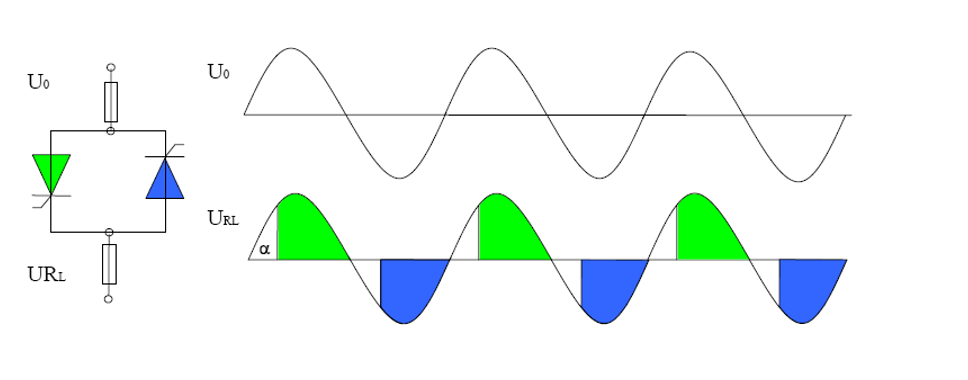
Phase control: regulating output via the SCR conduction angle.
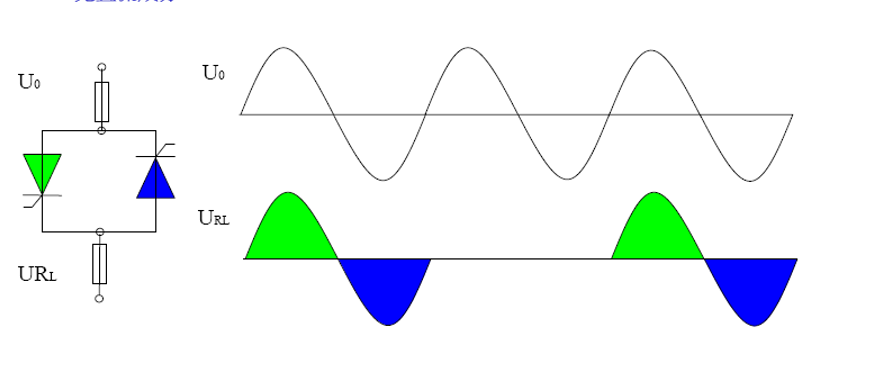
Zero-cross control: regulating power via the number of output cycles.
| Control method | Suited loads | Advantages | Notes |
|---|---|---|---|
| Phase control | Heating loads with large impedance change and dynamic temperature behavior. | Smooth voltage/current output; supports CV, CC, CP. | The smaller the conduction angle, the more harmonics need attention. |
| Zero-cross control | Resistive loads with large thermal inertia. | Little harmonic impact on the grid; fixed or variable cycle control. | A single unit may create current surges — check load and cycle settings. |
| Phase + zero-cross | Loads with low cold impedance and pronounced hot-state change. | Reduces startup surge, then switches to zero-cross control. | Confirm switching method, time setting, or external-control conditions. |
4. Single-phase or Three-phase Series?
Single-phase direction
For single-phase loads, look first at the STPR, SMART, ST200, ST300 series. Single-phase frames cover 10–1500 A; some economy models cover 10–150 A. High-performance models support remote panels, fast fuses, extended communication, PID, and more.
Three-phase direction
For three-phase loads, look first at the TTPR and APR3 series. Three-phase series include three-leg control and two-leg control main circuits; current frames cover 25–1500 A, with some APR series also offering a 25–450 A band.
| Judgment item | Choose single-phase | Choose three-phase |
|---|---|---|
| Load supply | Single-phase heating, single-phase loops, small single-zone control. | Three-phase furnaces, three-phase transformer loads, multi-zone or high-power heating. |
| Wiring | One-in-one-out or two-in-two-out. | Three-in-three-out, two-leg or full three-leg control. |
| Control complexity | Simple analog, panel setpoint, basic protection. | Multiple I/O, interlocks, communication, power sharing, system integration. |
| Typical applications | Single-phase furnace wire, local heating, small zones. | Industrial furnaces, diffusion furnaces, glass melting, material sintering, transformer primaries. |
5. Common Selection Mistakes
| Mistake | Risk | Correct approach |
|---|---|---|
| Selecting by total kW only | Ignores voltage, current, wiring, and startup surge — overcurrent or nuisance trips likely. | Confirm by maximum current, load curve, control method, and cooling together. |
| Treating every heating load as plain resistance wire | SiC, MoSi2, and transformer loads show resistance change and inrush. | Confirm load type first, then choose constant-power, current-limit, phase+zero-cross strategies. |
| Ignoring harmonics and power factor | Phase control raises harmonics in some conditions, affecting the grid and acceptance. | For high-power projects, assess PCC, transformer, filtering, and reactive compensation early. |
| Not confirming control signals | PLC, temperature controller, or host computer cannot link, or signals mismatch. | Confirm 4-20 mA, 0-5/0-10 V, RS485 Modbus, PROFIBUS/PROFINET. |
| Ignoring in-cabinet cooling and environment | Thermal derating, frequent alarms, shortened fuse or module life. | Check ambient temperature, altitude, air ducts, dust, corrosive gas, and installation space. |
Site Boundaries
Typical environments: indoor, out of direct sunlight, free of dust and corrosive gas, altitude below 1000 m, ambient -10 °C to +40 °C, with derating from 40 °C to 50 °C. Projects with high temperature, high altitude, dust, or corrosive environments must be recalculated against engineering conditions.
6. Case-style Judgment: Quick Preselection from Customer Information
| Scenario | Initial direction | Still to confirm |
|---|---|---|
| Three-phase furnace, SiC rods, 250 A zone current | Three-phase APR/TTPR direction; focus on constant power, current limiting, phase+zero-cross. | Cold/hot resistance, zone count, control signal, cooling, and fast fuses. |
| Resistance-wire heating, large inertia, low grid harmonics required | Evaluate zero-cross control or zero-cross closed-loop first. | Cycle settings, load surge, temperature accuracy, host interface. |
| Transformer primary voltage regulation | Evaluate phase control and current-limit protection first. | Transformer capacity, magnetizing inrush, load behavior, fuse and breaker coordination. |
| PLC centrally controlling multiple controllers | Confirm RS485 Modbus RTU or PROFIBUS/PROFINET extension. | Address count, communication cycle, interlock logic, analog feedback, fault outputs. |
7. FAQ
What is the first thing to check when selecting a controller?
The load: single- or three-phase, resistive or inductive, and whether resistance changes noticeably with temperature. Then main-circuit voltage, maximum current, control method, cooling, and protection.
Which is better, phase control or zero-cross?
Neither is absolutely better. Phase control gives smooth output and suits loads with large impedance change but generates harmonics; zero-cross has low harmonics and suits loads with large thermal inertia; loads with low cold impedance can evaluate phase+zero-cross.
Can a controller do constant power?
Yes — constant-voltage, constant-current, and constant-power modes can be configured per model. Heating elements with pronounced resistance change, such as SiC and MoSi2, usually need extra attention to constant-power and current-limiting capability.
Can it connect to a PLC or touch screen?
Yes, per model configuration. Standard RS485 supports Modbus RTU; some configurations extend to PROFIBUS-DP, PROFINET, or Modbus-TCP; analog and digital interlocks are also available.
Can you quote from equipment power alone?
Only a rough judgment. Formal selection needs at least voltage, current, load type, wiring, control signal, working environment, continuous running time, and protection requirements.
Need to Confirm a Model?
Provide input voltage, load type, maximum current, control signal, zone count, working environment, and site photos — KULUN Electric engineers will help judge single/three-phase, firing method, protection, and communication configuration. Submit your selection parameters.